

Considering an injection? Accuracy can make a real
difference.
If you've been living with ongoing joint, tendon or muscle
pain, you may have been advised to consider an injection as part of your
treatment.
But many people don't realise that how an injection is
delivered can be just as important as the medication itself.
That's why ultrasound guided injection therapy has become an
increasingly popular option for treating a range of musculoskeletal conditions.
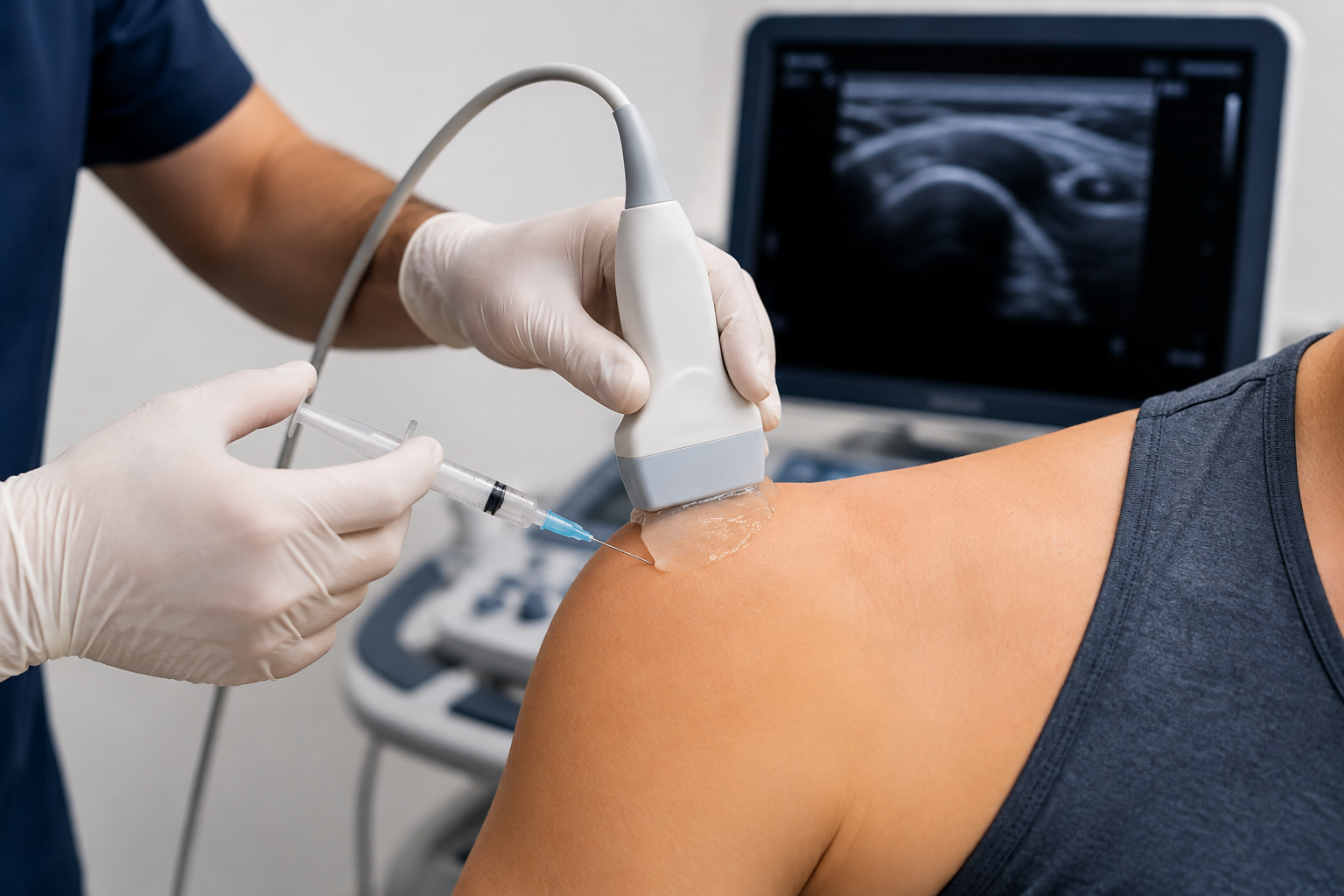
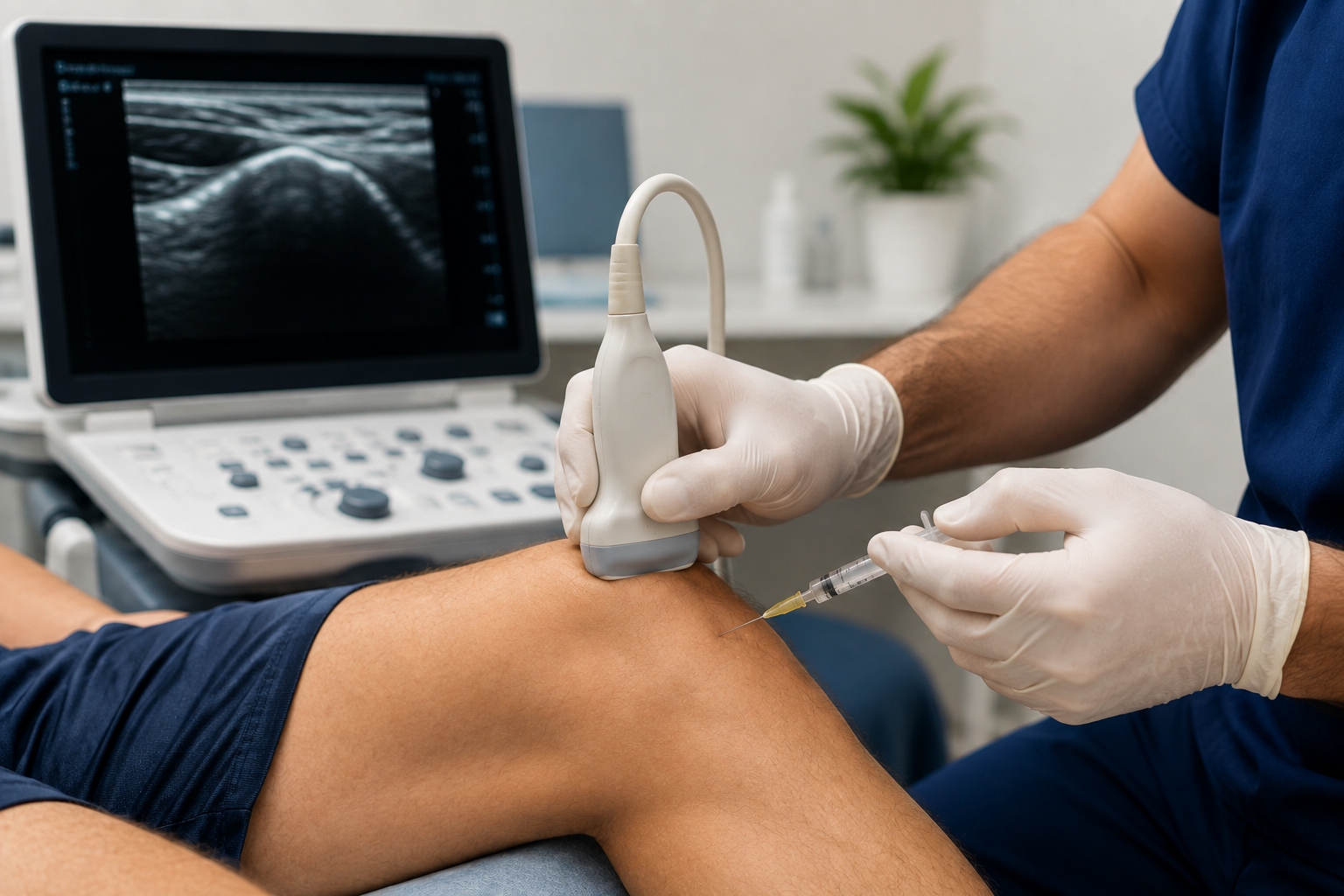
Using ultrasound allows your clinician to see the structures
beneath the skin in real time, helping guide the injection to the intended area
with greater precision. This gives the patient a greater understanding of the
pathology, feel more involved with decision making and increases confidence in
the procedure.
Why does accuracy matter?
Pain isn't always coming from exactly where you feel it.
Ultrasound can help diagnose the pathology and therefore
treat the appropriate source of symptoms.
Without imaging, identifying the exact treatment area can sometimes be
more challenging.
Using ultrasound helps your clinician clearly visualise the
affected area and accurately guide the injection.
This may help to:
- Improve
the precision of treatment
- Target
the intended joint or soft tissue
- Avoid
surrounding structures where possible
- Give
both you and your clinician greater confidence during the procedure
When might an ultrasound-guided injection be considered?
Not every condition requires an injection.
In many cases, physiotherapy, education and exercise remain
the first line of treatment.
However, ultrasound guided joint injections may be
considered if:
- Pain
continues despite conservative treatment
- When
the diagnosis is unclear
- When
dynamic assessment matters
- Symptoms
are affecting your daily activities
- Your
clinician believes an injection could support your rehabilitation
The decision is always based on your symptoms, clinical
findings and long-term recovery goals, not simply on the presence of pain.
Why assessment always comes first
An injection should never be recommended without
understanding the cause of your symptoms.
A thorough assessment helps your clinician determine:
- What's
causing your pain
- Which
structures are involved
- Whether
an injection is appropriate
- Whether
another treatment may be more beneficial
Sometimes an injection is the right option.
Sometimes physiotherapy or rehabilitation offers the better
long-term solution.
The goal is always to recommend what's best for you.
More than just an injection
It's easy to think of injections as a quick fix.
In reality, they're often just one part of a wider recovery
plan.
While reducing pain can help you move more comfortably,
lasting improvement usually comes from addressing the underlying cause of the
problem.
That's why ultrasound guided injection therapy is often combined with:

- Physiotherapy
- Strengthening
exercises
- Mobility
work
- Movement
retraining
- Personalised
rehabilitation
Together, these treatments help support long-term
recovery—not just short-term pain relief.
Why choosing experienced clinicians matters
When considering musculoskeletal injections, experience is
just as important as the technology being used.
Experienced ultrasound guided injection specialists don't
simply perform injections.
They carefully assess whether an injection is the most
appropriate option for your condition.
Their recommendations are based on:
- Your
diagnosis
- Your
medical history
- Your
symptoms
- Your
lifestyle
- Your
recovery goals
This personalised approach helps ensure your treatment plan
is tailored to your individual needs.
Exploring your treatment options
Whether you're considering private steroid injections, ultrasound
guided joint injections or simply looking to understand your options, the first
step should always be a comprehensive assessment.
Understanding the cause of your symptoms allows you to make
informed decisions about your care and gives your clinician the information
needed to recommend the most appropriate treatment.
At The Physiotherapy Centre, our injection therapy service
is available at our Sittingbourne clinic on Conqueror Court. Our experienced
clinicians provide personalised assessment and treatment to help you make
informed decisions about your recovery.