Why Pilates Challenges Your Body Differently
Not every effective workout needs to involve heavy weights, fast movements or intense cardio. Sometimes, the greatest challenge comes from learning to move with greater control.
This is what makes Pilates different from many other forms of exercise.
Rather than concentrating primarily on how many repetitions you complete or how quickly you move, Pilates encourages you to pay attention to your technique, breathing, balance and body alignment. Even a straightforward movement can require considerable concentration when performed with precision.
For many people, this approach offers a different perspective on fitness. The goal is not simply to finish a workout, but to develop a better understanding of how the body moves.
Pilates Involves More Than Core Strength
Pilates is often associated with strengthening the abdominal muscles, but its principles extend throughout the body.
Your spine, pelvis, hips, shoulders and abdominal muscles work together to support movement and maintain stability. When one area struggles to provide sufficient support, other muscles may work harder to compensate.
Consider lifting one leg while lying on a mat. Although the movement appears simple, your body must control the position of your pelvis and trunk while the leg moves independently.
Pilates exercises explore these connections through carefully controlled movements. The emphasis is on developing coordination between different muscle groups rather than concentrating on a single area in isolation.
Over time, practising these movements can help you become more aware of your body's positioning and control.
Why Moving Slowly Can Take More Effort?
Slowing down an exercise might sound like a way to make it easier. In Pilates, however, a slower pace can introduce an entirely different challenge.
When movements happen quickly, momentum can contribute to completing them. A controlled pace requires you to manage each stage of the movement, including the transition between positions.
For instance, raising and lowering a leg slowly may require more concentration and muscular control than performing the same action quickly.
This is why Pilates does not need to leave you breathless to feel demanding. The effort often comes from maintaining stability, using the appropriate muscles and avoiding unnecessary movement.
The aim is not to move as quickly as possible, but to make each movement deliberate.
How Breathing Supports Movement?
Breathing plays an active role in Pilates rather than being something to think about only when an exercise becomes tiring.
Practitioners are encouraged to coordinate their breathing with particular movements. This can help maintain a steady rhythm, support concentration and reduce the tendency to hold the breath during challenging exercises.
Learning to pay attention to breathing also encourages greater awareness of physical effort.
These principles can be relevant beyond an exercise session. Activities such as reaching overhead, bending to pick something up or standing from a chair involve coordination between different parts of the body.
Pilates provides an opportunity to practise this coordination in a more focused environment.
Understanding Mat Pilates
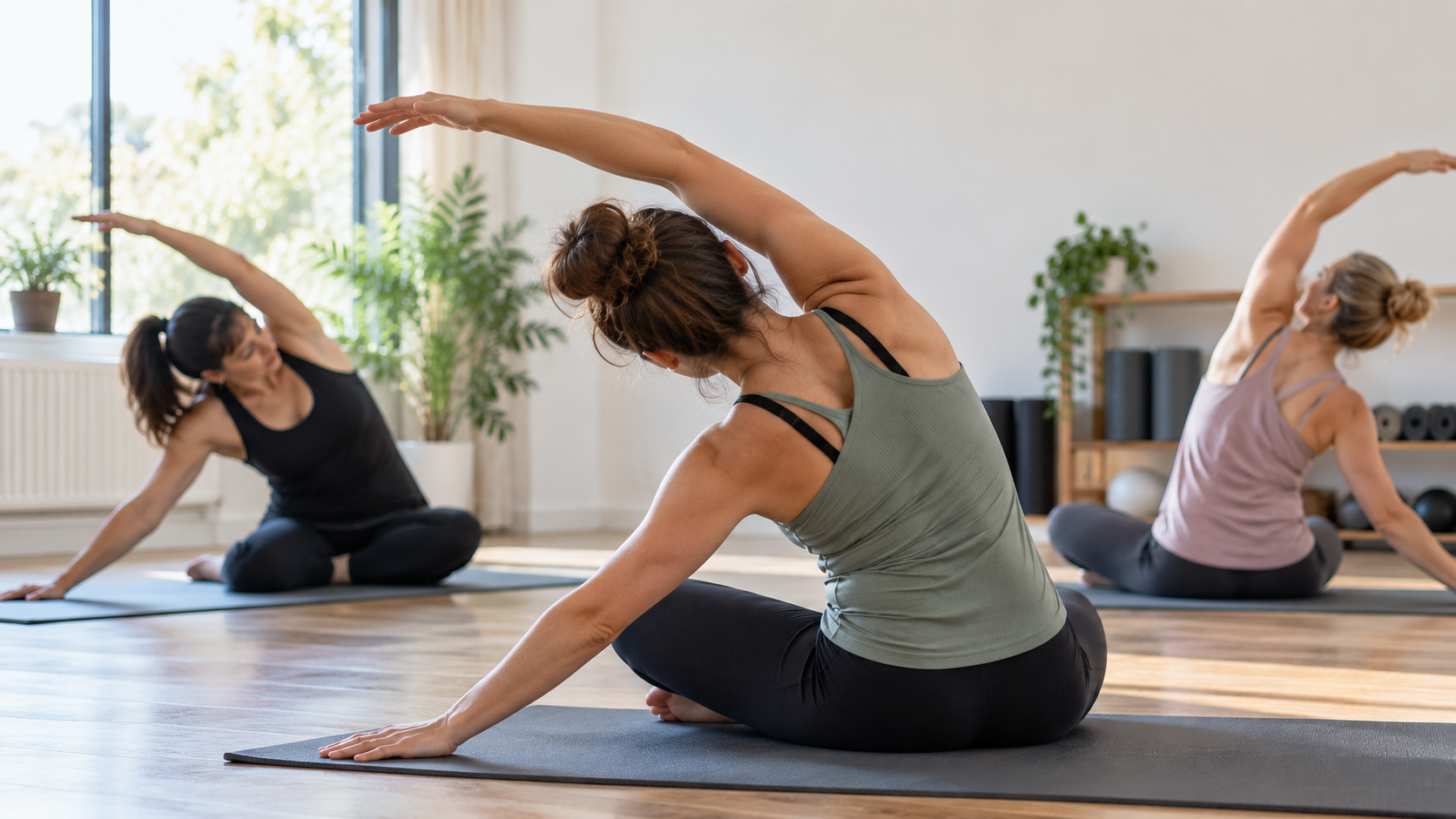
Pilates can be practised using specialist equipment or with a mat and body weight. Mat Pilates offers an accessible starting point for many people because numerous exercises can be performed without large machines.
The exercises can focus on strength, balance, mobility and stability, depending on the movement and how it is performed.
However, the apparent simplicity of mat exercises can be misleading.
For example, lifting one leg while lying on your back may seem straightforward. Maintaining a steady pelvis, controlling the movement and breathing comfortably at the same time can make it considerably more challenging.
Technique therefore matters just as much as the movement itself.
An exercise that feels manageable for one person may be difficult for another because of differences in strength, mobility, coordination and previous experience.
Why Beginners May Find Pilates Challenging?
Pilates is sometimes mistaken for a very easy form of exercise because many movements look gentle. In practice, beginners may discover that even introductory exercises require more concentration than expected.

Managing these elements together can take time, particularly if the movements are unfamiliar.
There is no need to get everything right immediately. Starting with simpler exercises and gradually progressing allows you to become more comfortable with the techniques as your confidence and ability develop.
Measuring Progress Beyond Repetitions
Fitness progress is often associated with measurable increases, such as lifting heavier weights, completing more repetitions or covering a greater distance.
Pilates offers additional ways to recognise improvement.
You may find that you can maintain a position with less effort, control a movement more smoothly or complete an exercise without relying on momentum. You might also become better at recognising when your body is losing stability.
These changes are worth paying attention to, even when the number of repetitions remains the same.
By prioritising technique and control, Pilates encourages a different relationship with exercise. Instead of focusing exclusively on how much you do, you can also consider how effectively you perform each movement.
How Pilates May Influence Everyday Movement?
The skills practised during Pilates can encourage you to pay closer attention to your movements outside the class.
You might become more conscious of how you position yourself while working at a desk, how you maintain your balance on stairs or how you coordinate your body when reaching and bending.
However, the effects will vary from person to person. Pilates is not a guaranteed solution for every posture concern or movement difficulty, and improvements in a class do not automatically translate into changes in every daily activity.
Its value lies partly in providing a structured opportunity to practise movement awareness, strength and coordination, which can complement an active lifestyle.
Do You Need to Be Flexible Before Starting Pilates?
Not at all. You do not need to be particularly flexible or experienced in exercise to begin a suitable Pilates programme.
Flexibility is only one part of physical fitness. Strength, balance, joint mobility and movement control are also important.
A beginner can start with exercises suited to their current abilities and progress gradually as they become more familiar with the movements.
Trying to match the range of movement or difficulty demonstrated by a more experienced participant is unnecessary. Working at an appropriate level allows you to focus on technique without placing undue demands on your body.
How Frequently Should You Attend Pilates Classes?
The ideal frequency depends on your goals, current activity levels, available time and ability to recover between sessions.
For many people, attending a class once or twice a week can be a practical starting point. Consistency is generally more sustainable than following an ambitious routine that becomes difficult to maintain.
Your Pilates practice can also complement other forms of physical activity. Walking, swimming, cycling, strength training and recreational sports each offer different benefits, so there is no need to view Pilates as a replacement for everything else you do.
A balanced routine that suits your circumstances is often a more realistic long-term approach to staying active.
Is Pilates Suitable If You Have Pain or an Injury?
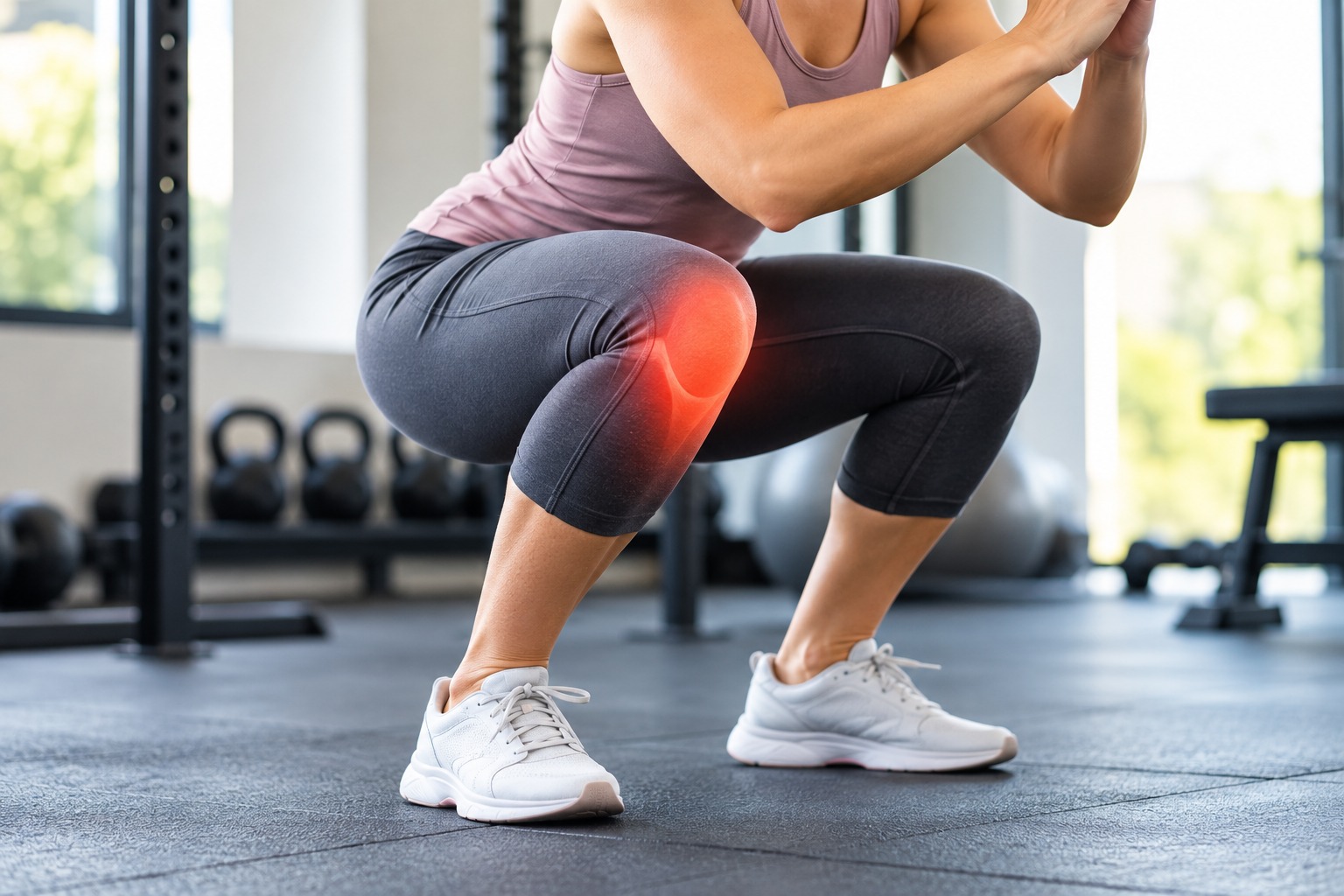
Your choice of exercise should take account of your current physical condition, particularly if you are recovering from an injury or experiencing ongoing pain.
Some Pilates movements may need to be adapted to accommodate your mobility, symptoms or individual limitations. An exercise that is appropriate for one participant may not be suitable for someone with different needs.
Having pain does not automatically mean that all exercise should be avoided. However, choosing appropriate movements and adjusting their difficulty can be important.
If you have persistent pain, a recent injury or a diagnosed musculoskeletal condition, consider seeking advice from a qualified physiotherapist before starting or changing your exercise routine.
If you would like to explore guided Pilates sessions, you can [learn more about Pilates in Sittingbourne at The Physiotherapy Centre]
Pilates: A Different Way to Approach Fitness
Pilates encourages you to look beyond the number of exercises completed or the intensity of a workout.
It places importance on the relationship between movement, breathing, stability and control. Rather than rushing through an exercise, you learn to pay attention to how your body responds and how different areas work together.
This combination of physical effort and concentration is what makes Pilates distinctive.
You do not need to perform complicated movements or push yourself to exhaustion to make your practice worthwhile. Starting at an appropriate level, focusing on technique and progressing at a comfortable pace can help you build a consistent exercise habit.
Sometimes, progress is not about doing more. It is about becoming more aware of how you move.