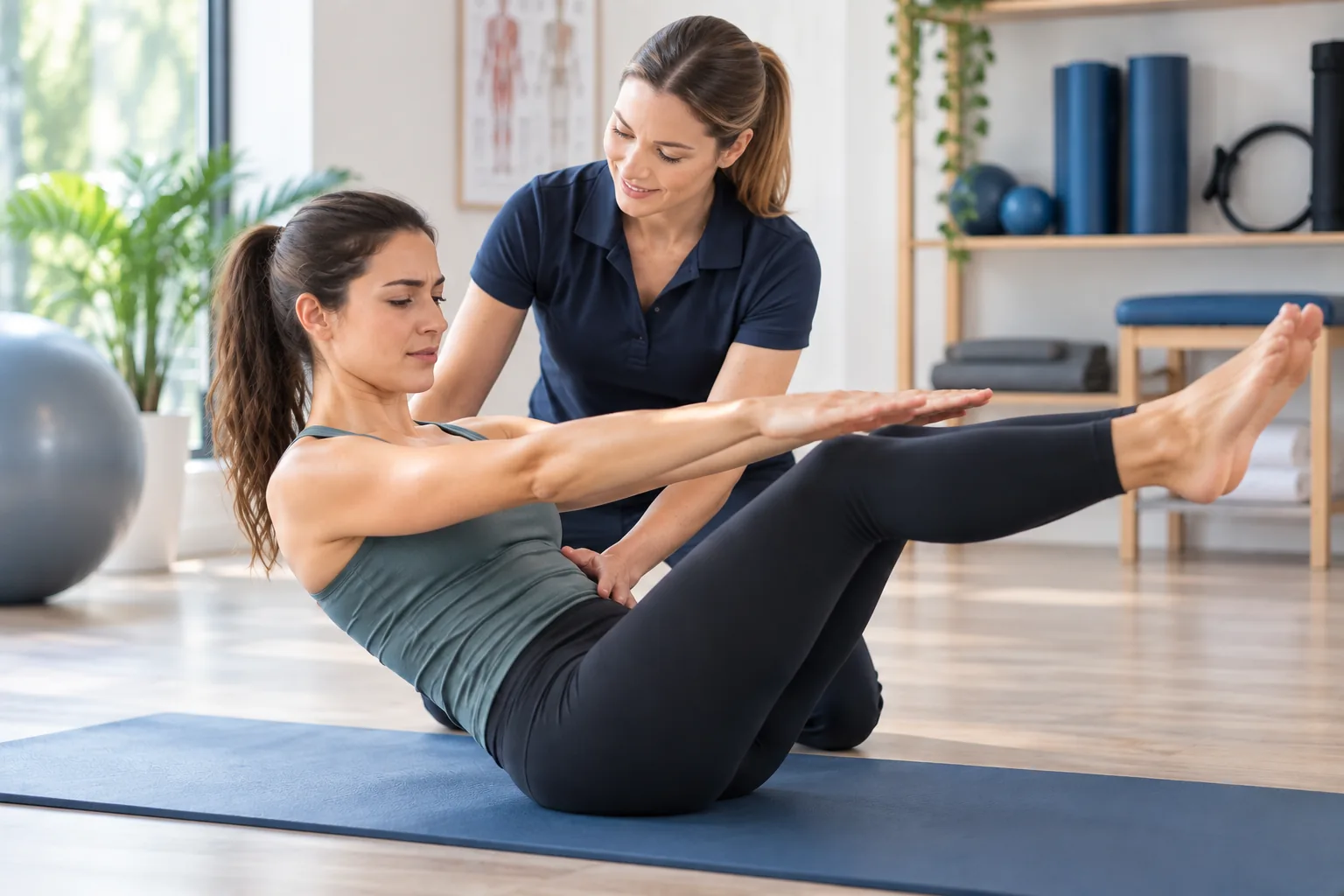
Pilates can look deceptively simple.
You might watch someone performing a slow leg movement or
holding a seemingly easy position and think, “How difficult can that be?”
Then you try it yourself.
Suddenly, your muscles are working harder than expected,
your balance feels different and movements that looked easy require serious
concentration.
So why does Pilates feel so challenging?
1. Slow Doesn't Mean Easy
One of the biggest surprises for people new to Pilates is
how demanding slow, controlled movement can be.
Instead of rushing through an exercise, you are encouraged
to focus on:
- How
you move
- Where
your body is positioned
- How
you breathe
- How
much control you have
- Which
muscles are working
Removing momentum can make a simple movement considerably
more challenging.
2. Your Smaller Muscles Have to Work
Pilates isn't just about moving your arms and legs.
Many exercises require your body to maintain stability while
another part moves.
This means muscles around your:
- Abdomen
- Hips
- Back
- Pelvis
- Shoulders
may need to work together to keep you controlled.
You may therefore feel muscles working that you don't
normally notice during everyday activities.
3. Balance Adds Another Challenge
Some Pilates exercises require you to control your body
while changing your position or reducing your base of support.
That brings balance and coordination into the picture.
Even a small movement can become difficult when you are
trying to keep the rest of your body steady.
This is one reason an exercise can look easy but feel
completely different when you perform it yourself.
4. Breathing Is Part of the Movement
Breathing isn't simply something you do between exercises.
Pilates often encourages you to coordinate your breathing
with movement.
This can make you more aware of:
- Rib
movement
- Abdominal
control
- Tension
in your body
- Your
movement rhythm
For someone new to Pilates, thinking about movement and
breathing at the same time can take some practice.
5. Your Body May Be Learning a New Movement Pattern
You don't have to be unfit for Pilates to feel difficult.
Sometimes the challenge comes from learning something
unfamiliar.
Your body may need time to develop:
- Coordination
- Control
- Balance
- Movement
awareness
- Confidence
with particular exercises
That is completely different from simply needing to become
stronger.
With practice, movements that initially feel awkward can
become more familiar.
6. You Don't Have to Feel Exhausted for Pilates to Be
Effective
Pilates isn't necessarily about finishing a session
completely exhausted.
A productive session may involve quality rather than
quantity.
Instead of asking:
“How many repetitions can I do?”
it can be more useful to ask:
“Can I perform this movement with good control?”
A smaller number of well-controlled movements may challenge
you more than repeatedly rushing through an exercise.
7. You May Notice Muscles You Didn't Know You Had
It is not unusual to become more aware of your muscles
during or after a Pilates session.
You might notice:
- Muscle
fatigue
- A
feeling of working deeply
- Mild
post-exercise soreness
- Increased
awareness of certain areas of your body
However, pain is different from normal exercise effort.
If an exercise causes sharp, persistent or unusual pain,
don't simply push through it. Let your instructor or physiotherapist know so
the movement can be reviewed.
Does Pilates Get Easier?
Usually, the goal isn't simply to make every exercise feel
easy.
As you become more familiar with the movements, you may
develop better control and confidence.
That can allow you to progress gradually by changing:
- Repetitions
- Movement
range
- Position
- Resistance
- Balance
demands
- Exercise
complexity
What once felt difficult may eventually become much more
manageable.
And that's often where the real progress happens.

What If You Have Pain or an Injury?
Pilates can be part of an active lifestyle, but it isn't
appropriate to assume that every exercise suits everyone.
If you have an existing injury, persistent pain or a
condition that affects your movement, it is worth discussing this with a
qualified healthcare professional.
A physiotherapist can help identify movements that may need
modification and guide you towards exercises that are appropriate for your
individual situation.
Pilates Isn't About Making Every Movement Look Perfect
One of the most useful things to remember is that Pilates is
not a competition.
You don't need to perform every movement perfectly on your
first attempt.
Focus on:
- Moving
with control
- Understanding
the exercise
- Listening
to your body
- Progressing
gradually
- Asking
for help when something doesn't feel right
The Physiotherapy Centre offers physiotherapy-led Pilates across
kent, with sessions designed to help people develop better movement and
confidence at their own pace.
The Takeaway
Pilates can look gentle because the movements are controlled
and deliberate.
But that control is exactly what can make it challenging.
Slow movement, stability, balance, coordination and
concentration can turn a small exercise into a surprisingly effective workout.
So if you've ever finished a Pilates session thinking, “That looked much easier than it felt,” you're certainly not alone.